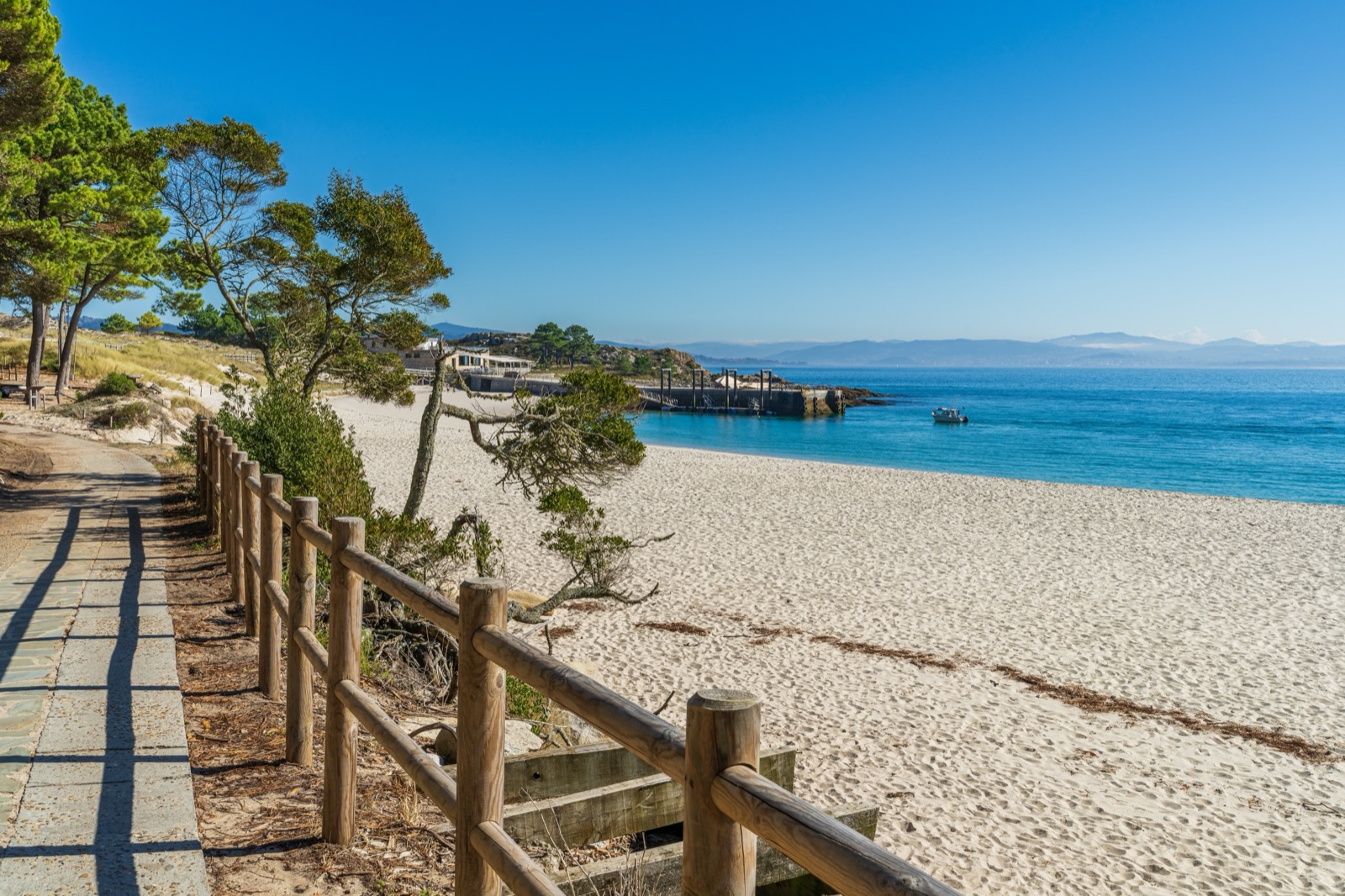
Food on the Cíes Islands and What to Pack: Restaurants, Picnics, Water and a Day-Bag Checklist
In season you will not go hungry on the Cíes Islands: there are three restaurants and a sandwich bar, all near Rodas beach and the jetty, plus a snack bar and a small supermarket at the campsite. But there is no safe drinking water from the fountains, no bins to leave your rubbish in, and out of season the places to eat may be closed, so what you pack matters as much as where you eat. This guide covers each place to eat, the picnic option, the rules on water, fires and rubbish, and a checklist for your day bag.
Where to eat at a glance
| Place | Where | What | Hours (in season) |
|---|---|---|---|
| Campsite restaurant | Campsite, Faro island | Breakfast, self-service lunch, tapas, à la carte | Breakfast 08:30–11:30, lunch 13:00–16:00, dinner 21:00–23:00 |
| Restaurante Rodas | By the jetty | Self-service lunch, family menu | 13:30 to 15:30 |
| Bar Serafín | Beyond the campsite, by Rodas | Sharing plates, plenty of fish | Meals 13:30–16:00 |
| Bocatería Begoña | Past Bar Serafín | Hot and cold sandwiches, burgers | Check on the day |
| Campsite snack bar | Campsite | Breakfast, drinks, snacks | 9:30 to 01:00, 15 May to 15 September |
| Campsite supermarket | Campsite | Groceries, drinks, ice | 10:00–20:00, 15 May to 15 September |
All establishments on the island take cards, except the activities, which are paid in cash. Hours are those the businesses and ferry operators publish, and can change; check whether the restaurants are open outside the season.
The restaurants
The campsite restaurant
The campsite restaurant, open to everyone, has been run by the Fernández Monzonís family since 1962, with a terrace over the lagoon and Rodas beach. It is the one place that serves all three meals.
- Breakfast is self-service: toast, fresh juice, fruit, cold meats, Spanish omelette and pastries.
- Lunch and dinner: it serves self-service light lunches, tapas and à la carte dishes such as seafood rice, grilled fish and octopus, with children’s, vegetarian and allergy options.
- The house specialities are local: octopus ‘a feira’ and fish from the estuary such as sea bass and sea bream; goose barnacles and razor clams come from the islands’ waters under a sustainable plan.
- Galician wines are on the list: Albariño, Ribeiro and Mencía.
You do not need to be camping to eat there; the walk from the jetty is along the main path towards the lighthouse.
Restaurante Rodas
Restaurante Rodas stands by the jetty in an old salting factory, with a covered terrace; it is self-service from 13:30 to 15:30, with a menu suited to families. It is the first place you reach off the boat, and its terrace looks over the lagoon and Rodas beach. There is a history to the building: around 1840 two fish-salting factories were built, one where the Rodas restaurant now stands.
Bar Serafín
Bar Serafín, at the other end beyond the campsite, has a terrace with a boardwalk to Rodas beach and serves meals 13:30–16:00, mainly sharing plates with plenty of fish. It suits a long beach lunch: order a few plates to share and go straight back to the sand.
Bocatería Begoña
Past Bar Serafín, the Bocatería Begoña sells hot and cold sandwiches and burgers. It is the quick, cheap option, and the busiest at lunchtime.
The campsite snack bar and supermarket
Even if you are not staying, the campsite’s snack bar and shop are useful.
- The snack bar, with views of the lake, opens 15 May to 15 September, from 9:30 to 01:00, for breakfast, drinks and snacks.
- The small supermarket sells fresh fruit, canned food, cold meats, fresh bread, cold drinks, ice, toiletries, camping supplies and beach items. It opens 10:00–20:00, from 15 May to 15 September.
- The supermarket has a few products for coeliacs and other intolerances, but advises bringing what you need from home.
At Easter, note, the campsite’s supermarket and bar are closed.
Eating out or a picnic?
Both work, and many visitors do one of each over a day.
Eat out if you want a proper Galician lunch with a view, are visiting in July or August when everything is open, or are travelling light.
Bring a picnic if you are visiting out of season, are on a budget, have dietary needs, want to eat at the far end of a walk, or would rather not queue at peak lunchtime on a busy day.
Where to picnic
Rest areas with stone tables are by O Lago, Nuestra Señora (Nosa Señora) beach and the path to Figueiras beach, in the shade of the trees. They are the best places for a picnic; the beaches work too, as long as you take everything away with you. Avoid the dunes, which are a protected area: the dunes around Rodas are a conservation zone in recovery.
Keep your food away from the gulls
22,000 pairs of yellow-legged gulls form the largest colony in the world, and the gulls are bold around food. Keep food in closed bags and boxes, do not feed them, and never leave food on the sand when you swim. The campsite asks the same of campers: do not leave rubbish or food outside your tent: the gulls make a mess of it.
Water
This is the most important thing to get right.
- There is no drinking water: the public fountains have no health guarantee, so bring water, though it can be bought at the islands’ eateries.
- The islands are windy, with a lot of salt in the air, which together with the sun makes dehydration likely. You will drink more than you expect, especially on the lighthouse walk.
- Bring at least a large bottle per person for a day, more for the walk in summer, and top up at the cafés or the campsite shop when they are open.
Rubbish: take it home
Leaving rubbish of any kind is forbidden. In practice that means carrying out everything you bring in: wrappers, bottles, cans, food scraps, wet wipes. Pack a spare bag for it.
Campers can use the campsite’s clean point for rubbish generated at the campsite, but day visitors take their rubbish back to the mainland. It is one of the reasons the islands look the way they do.
Fires and cooking
- Fires of any kind are forbidden, so there are no barbecues anywhere on the islands, including on the beaches.
- Flammable gases and liquids, including camping gas, are not allowed on the boats. Campers can buy or hire a cylinder at the campsite and cook on the pitches, outside the tent.
- For a day visit, bring food that needs no cooking.
Out of season
Nabia says there are places to eat on the Cíes in high season, and advises checking out of season whether any are open. From mid-September to mid-May, assume you need to bring all your food and water, and treat anything open as a bonus. From 15 September to 15 May (except Easter) you do not need to request a permit yourself, and visits are made in guided groups.
Eat in Vigo before or after
If you sail from Vigo, the city’s food is part of the day. A few steps from the A Pedra market is Rúa da Pescadería, known as Rúa das Ostras, where fresh Arcade oysters are prepared in full view of the public. It is a short walk from the boats, and a good place for a late lunch after an early return. The Vigo guide has more.
The day-bag checklist
Essentials
- Your permit (in high season): the QR code, printed or on your phone, as it is asked for at boarding. Collect your ticket at the ferry office before boarding.
- Water, plenty of it.
- Food for a picnic or snacks, even if you plan to eat out.
- Sun protection: high-factor sunscreen, a hat and sunglasses. There is little shade on the beaches and the lighthouse path is exposed.
- A warm layer and a windproof. The boat crossing and the high points are often windy and cool, even in summer.
- Walking shoes or trainers for the lighthouse route: 7 km there and back, about 2 h 30 min, climbing 175 m.
- Swimsuit and towel.
- A bag for your rubbish.
Useful
- Cash for activities, which are paid in cash on the island.
- A small first-aid kit: there is no pharmacy on the island, and a first-aid point operates only in high season, at the campsite.
- Binoculars for the seabird observatories.
- A power bank. The Cíes have free Wi-Fi called ‘Wireless Galicia’, which may struggle when the island is full.
- Insect repellent, especially if you are staying the evening.
- A wetsuit, mask and fins, if you plan to snorkel on your own; see the snorkelling, kayaking and diving guide.
Leave at home
- Pets: pets may not be landed, except guide dogs.
- Bicycles: bicycles are not allowed on the Cíes or Ons.
- Drones and kites, unless you have express permission from the park.
- Camping gas, which the boats will not carry.
- Children’s shrimping nets: park rules forbid carrying children’s shrimping nets, weapons, harpoons or spearguns.
- Loudspeakers: loudspeakers and noise that disturbs the natural peace are not allowed.
What to try
The islands’ restaurants keep to Galician coastal cooking, and a few dishes are worth looking out for.
- Octopus ‘a feira’: boiled octopus sliced over potatoes with paprika and olive oil, the classic Galician dish. The campsite restaurant also cooks it ‘in caldeirada’, a fisherman’s stew.
- Goose barnacles (percebes): gathered by hand from the rocks of the Atlantic coast, often in dangerous conditions, and served simply boiled. They are among the most prized shellfish in Galicia.
- Razor clams: grown under the sand of Rodas beach and gathered by divers.
- Grilled fish from the estuary: sea bass, sea bream and John Dory, simply grilled.
- Seafood rice and black rice with cuttlefish: good for sharing on a terrace.
- Galician pie (empanada): easy to share and to carry.
- Albariño: the crisp white wine of the Rías Baixas, the obvious match for all of the above.
Dietary needs
- Coeliac and other intolerances: the campsite supermarket stocks a few suitable products, but the range is small, so bring what you rely on.
- Vegetarian and vegan: the campsite restaurant says vegans, vegetarians and people with allergies will find something; the other places lean heavily on fish and seafood.
- Children: the campsite restaurant has children’s menus, and Restaurante Rodas has a menu adapted to families.
- Allergies: ask before you order, and carry any medication you need, as there is no pharmacy on the island.
Timing your lunch
On a busy summer day, most day visitors arrive on the morning boats and want lunch at the same moment. Restaurante Rodas and Bar Serafín serve their lunches in a window of two to two and a half hours, so the queues build quickly.
- Eat early or late. Arrive as the kitchens open, or come back from the walk after the main rush.
- Plan around your walk. If you start the lighthouse route straight off the boat, you will be back near Rodas around the time lunch begins.
- Keep a picnic in reserve in case the queue is long or a kitchen has closed early.
Dressing for the islands
The Cíes are an Atlantic island group, and the weather can change across a single day.
- Layers. A T-shirt for the beach, a fleece or jumper, and a light windproof jacket cover most summer days.
- Shoes. The paths are rough in places, and the final climb to the lighthouse is steep; trainers or walking shoes are better than flip-flops.
- Sun. The white sand reflects the light; a hat and sunglasses help.
- Rain. Outside the summer months, add a waterproof. The best time to visit guide shows how the weather changes through the year.
Luggage and lockers
If you arrive with luggage, or want to walk light:
- At Vigo’s Maritime Station a private company runs a 24-hour luggage locker service.
- On the island, lockers about 60 x 40 x 40 cm can be rented for €5 a day plus a €5 deposit, by day visitors too, at the campsite.
- There is no luggage weight limit on the boats, but carry your own bags.
Staying overnight
Campers have more to think about: cooking gear, gas bought on the island, enough food for several days or meals at the restaurants, and warm clothes for the nights. The campsite says summer daytime temperatures range from 20 to 27 degrees, with cool nights, and suggests a sleeping bag, walking shoes, high-SPF sunscreen and mosquito repellent. The camping guide has the full picture.
A sample food plan for a day trip
- Before the boat: breakfast in Vigo or Cangas; buy water and picnic food.
- Mid-morning: walk the lighthouse route with water and a snack.
- Lunch: a picnic at the O Lago rest area, or a long lunch at one of the restaurants by Rodas.
- Afternoon: an ice cream or a cold drink from the campsite shop or snack bar, then the beach.
- Evening: back on the mainland, oysters or dinner in Vigo.
If you would rather have food arranged for you, the full-day sailing trip with a skipper includes a picnic on board, snorkelling and paddleboarding; see the tours page.
Common mistakes
- Too little water. The walk, the wind and the sun dry you out faster than you expect, and the fountains are not safe to drink from.
- No bag for rubbish. There is nowhere to leave it, so you carry it back.
- Counting on lunch out of season. Outside the summer months, kitchens may be closed; bring food.
- Lunch at the peak. On busy days, the queues at midday are long; eat early, late, or from your own bag.
- Dressing for the beach only. The crossing and the lighthouse are often cool and windy.
- No cash for the activities, which are paid in cash on the island.
- Packing camping gas for a picnic stove: the boats will not carry it, and fires are banned anyway.
- Leaving food on the sand while you swim, within reach of the gulls.
Frequently asked questions
Are there restaurants on the Cíes Islands?
Yes, in season: three restaurants (the campsite restaurant, Restaurante Rodas and Bar Serafín) and a sandwich bar, all near Rodas beach and the jetty.
Can I bring my own food?
Yes. Picnics are common; use the rest areas by O Lago, Nuestra Señora beach or the path to Figueiras, and take all your rubbish home.
Is there drinking water on the Cíes?
No safe drinking water from the fountains. Bring water, or buy it at the islands’ eateries and the campsite shop.
Can you have a barbecue on the Cíes Islands?
No. Fires of any kind are forbidden in the national park.
Can I pay by card on the island?
Yes, at all the establishments; activities such as the kayak and snorkel trips are paid in cash.